
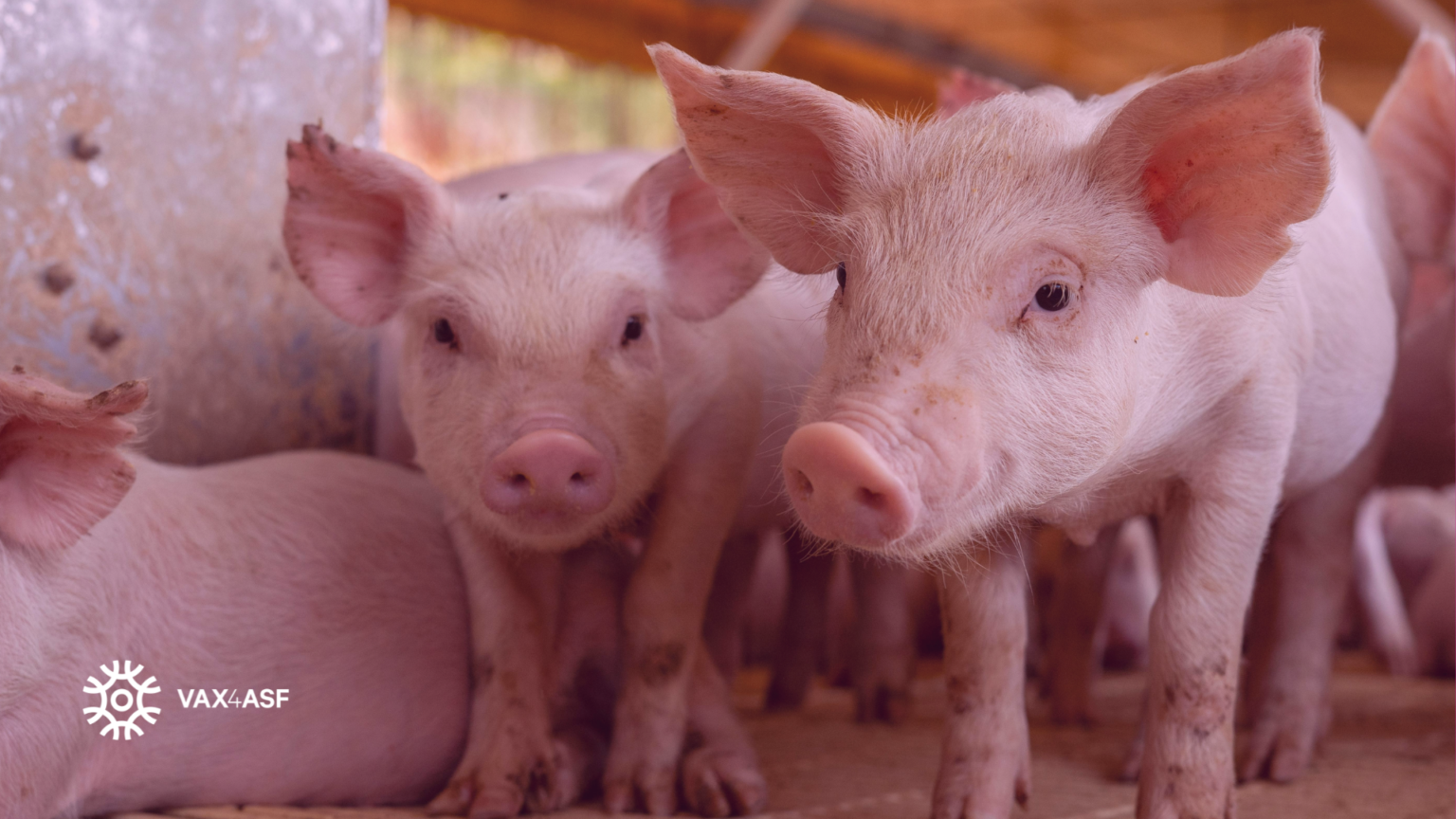
Protection against African swine fever begins within hours of infection, through a series of coordinated immune responses. This article explores these processes and their role in shaping next-generation vaccine strategies.
Understanding how domestic pigs and wild boars defend themselves against African swine fever virus is essential for designing the next generation of safe and effective vaccines. African swine fever remains one of the most challenging viral diseases in animal health, but scientific progress is advancing quickly. Through the VAX4ASF project, partners are gaining new insights into how the virus interacts with the immune system and how this knowledge can support the development of innovative vaccines.
How African swine fever virus interacts with the swine’s immune system
When African swine fever virus enters the body, it targets specific immune cells—called macrophages—that normally help to detect and fight infections. Instead of being destroyed, the virus uses these cells to multiply and spread. This allows the infection to progress before the immune system can mount a full response.
A key part of the body’s early defence is the innate immune system, which serves as a primary trigger for the initial immune response. When cells sense danger, they release early warning molecules (scientifically known as type I interferons) that alert nearby cells to prepare their antiviral immune response. African swine fever virus has evolved several ways to block or weaken these signals, allowing it to establish infection before a strong defence can be organised.
One focus area in VAX4ASF is identifying which of the conserved viral antigens are most important for guiding a protective immune response
VAX4ASF partners are studying which viral components interfere with these early warning systems. Understanding these interactions may provide valuable insights towards achieving an informed design of vaccines capable of safely triggering strong, natural defence mechanisms.
Protection against African swine fever depends on more than antibodies alone. Animals that resist the disease typically show:
- A fast early immune reaction, before the virus spreads widely.
- Specialised immune cells that can identify and remove infected cells.
- Recognition of conserved viral antigens that remain similar across different strains.
One focus area in VAX4ASF is identifying which of these viral antigens are most important for guiding a protective immune response. Instead of referring to them as “cross-protective antigens”, we can consider them conserved viral antigens that contain epitopes recognised by the immune system across different ASFV strains. This helps to guide vaccine development towards solutions that remain effective as the virus continues to evolve.
How VAX4ASF uncovers these immune mechanisms
Modern analytical tools are helping researchers to understand how immune cells behave during infection or vaccination. For example:
- Single-cell analysis allows scientists to examine how individual immune cells respond.
- Cytokine profiling measures the “messenger molecules” that immune cells use to coordinate the response.
- Peptide screening helps to identify which parts of the virus are most likely to elicit a long-lasting protection.
In simple terms, these tools among others help the researchers to explore and understand which immune reactions will be the most helpful, and how vaccines can be designed to encourage the desired responses.
Towards a new generation of vaccines
The new knowledge we are generating from VAX4ASF research is essential as African swine fever continues to affect many regions. By better understanding how animals naturally fight the virus—and how the virus tries to hide from the host immune system—the scientists may gain insights for design vaccines targeting to activate the right defences at the right moment.
Consequently, the present work aims to bring the scientific community closer to developing safe and effective vaccines for protecting swine populations from the African swine fever virus, supporting farming communities, and strengthening Europe’s resilience against animal diseases.